



1The Tourist Information Centre
Inside, you can admire the model depicting Saint-Dizier as it was before 1775.
In the 13th century, Lord Gui II of Dampierre founded a fortified town on the borders of the Kingdom of France. Having become a Royal Stronghold in 1488, the town of Saint-Dizier was attacked in 1544 by the army of Charles V, ruler of the Holy Roman Empire. The resistance lasted over a month, during which time residents and soldiers defended the town’s ramparts, enabling King Francis I of France to organise the defence and save Paris from invasion.

2The Church of Our Lady of the Assumption
Built in 1202 by Gui II of Dampierre, the building served as an observation and defence post during the siege of 1544.
Four cannonballs are embedded in the corner of the tower to commemorate its role in the battle. The building was largely destroyed in a fire in 1775, which ravaged nearly two-thirds of the town. However, many points of interest were spared, including the 15th–16th-century statuary, the organ case erected by Cavaillé-Coll, and the stained-glass window depicting the martyred Bishop Didier.

3The Wallace Fountain
This ‘drinking fountain’, the first of its kind in Paris, takes its name from Richard Wallace, who commissioned the sculptor Charles-Auguste Lebourg to refine it.
Four caryatids support the dome from which drinking water flows. They represent kindness, simplicity, charity and moderation. Whilst the original model was cast in Haute-Marne at the Val d’Osne foundries, this one comes from the G.H.M. art foundry in Sommevoire, which maintains the Wallace fountains throughout the country.
Another Wallace Fountain is situated on the forecourt of the SNCF railway station.

4The Castle and its fortifications
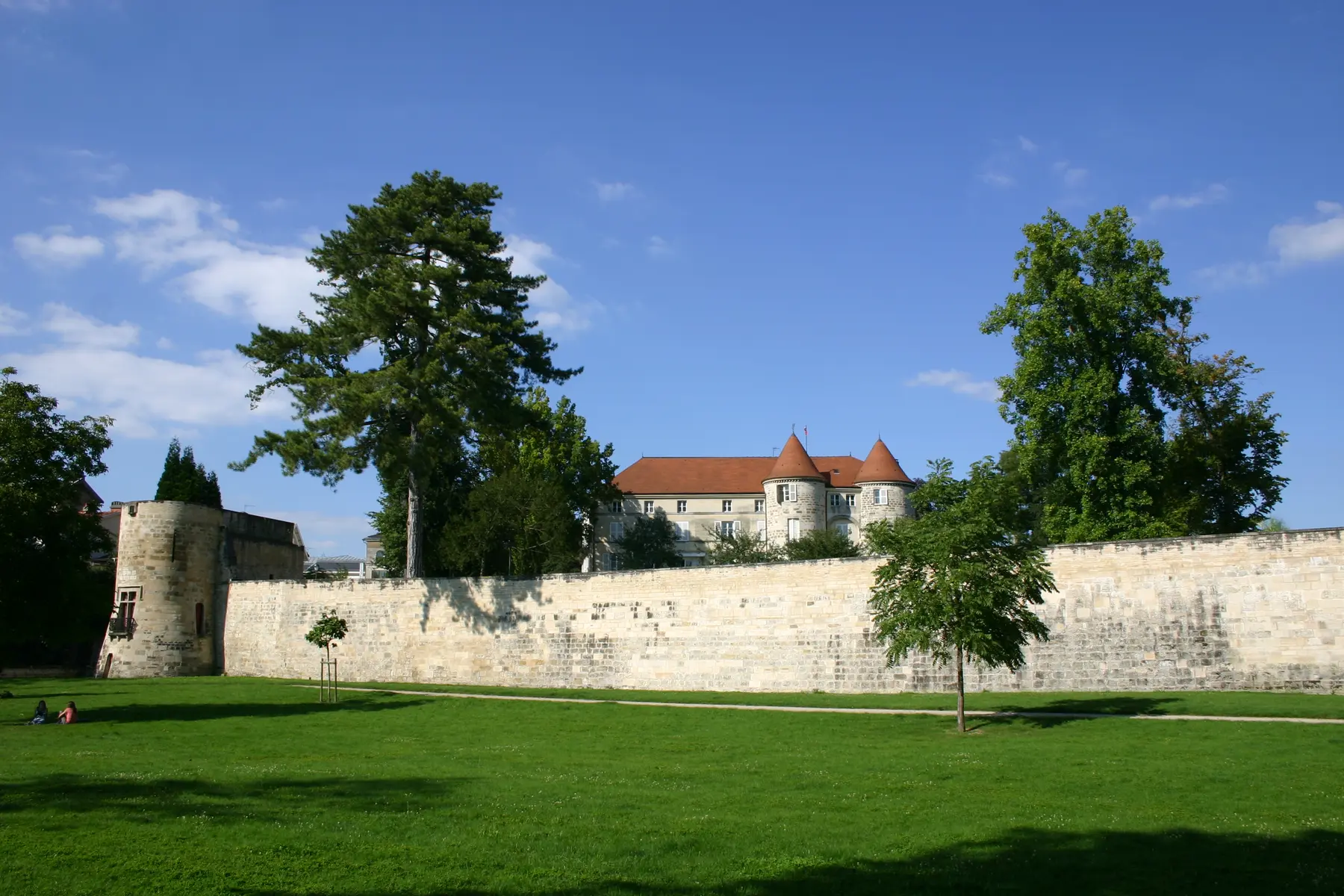
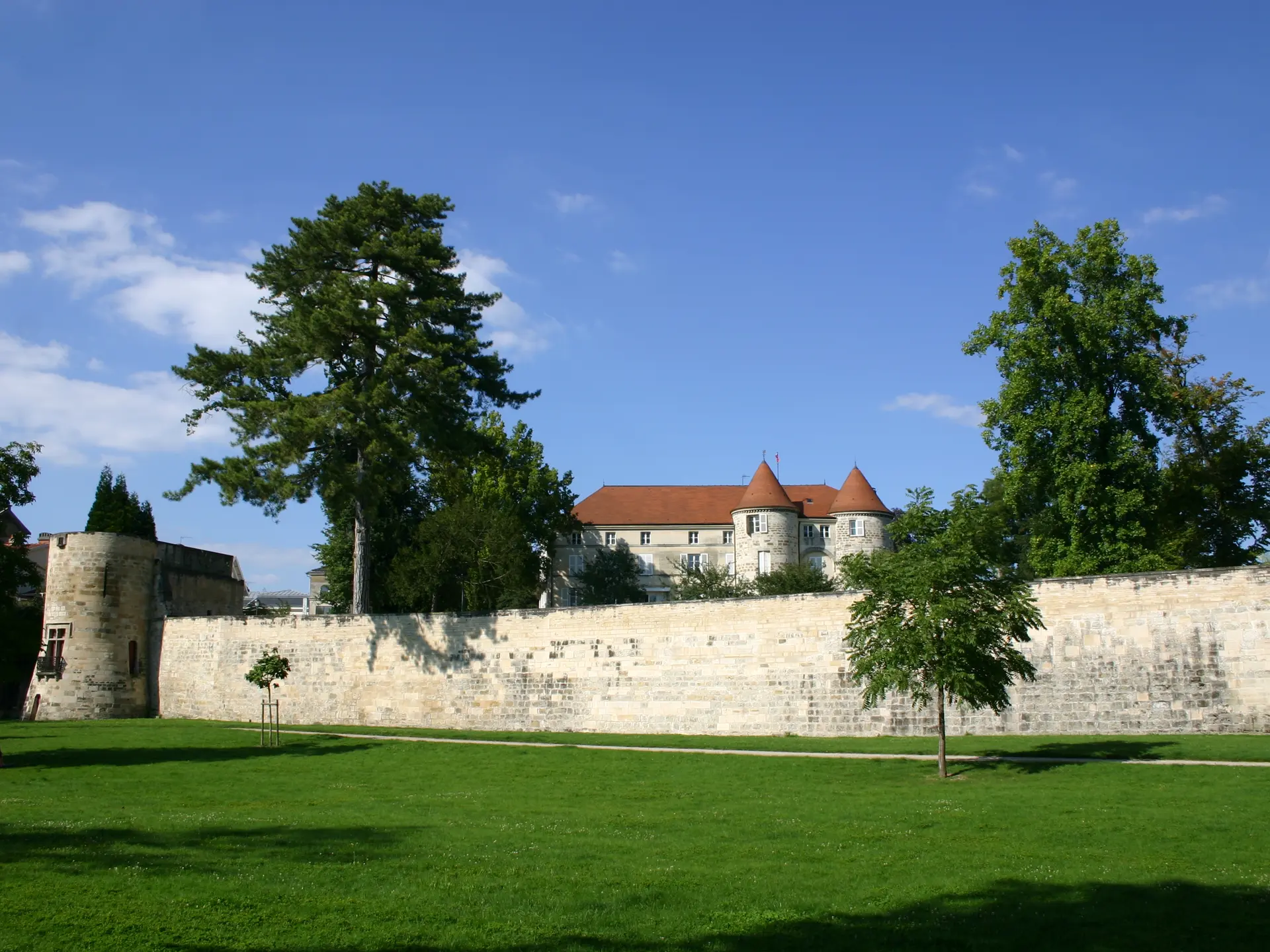
Home to the Sub-Prefecture since the Second World War, the castle was originally built at the same time as the fortified town by Gui II de Dampierre. The town was organised around the castle and its fortifications, flanked by around ten towers.
Over the centuries, it became a place of refuge for the town’s inhabitants and illustrious figures (François I, Mary Stuart, Henry IV, General de Gaulle, etc.). At the foot of the ramparts stand three 13th-century towers: the Tour du Saint-Esprit, the Tour de la Batterie and the Tour du Moulin (the most heavily damaged).

5MUSE Saint-Dizier
MUSE Saint-Dizier is a cultural venue in the heart of Saint-Dizier. Established with the support of the Réunion des Musées Nationaux – Grand Palais, MUSE aims to promote access to art for all.

6Les Halles
Designed by the Studiolada collective, this building blends tradition – with its three aisles, a nod to French markets – and modernity, as embodied by the massive arcades that form the market’s supporting pillars. Les Halles also showcases local craftsmanship, with its materials sourced from local producers, including the market stalls, which come from foundries in the Haute-Marne region.

7Half-timbered Houses
Opposite the church and around Place Emile-Mauguet, the half-timbered houses bear witness to the town’s medieval character. Having been spared by the fire of 1775, the façade and roof of the house on the corner of Rue Catel are listed as 15th-century Historic Monuments.

8Saint-Dizier Museum
Founded in the late 19th century on the town’s ramparts, the museum showcases exceptional collections, including a Merovingian treasure, a series of stuffed birds and art castings from the Haute-Marne region.
On the façade, Jacques Parreaut’s sculpture ‘Fortifications’ depicts the former 16th-century stronghold.
Winston Churchill Square, partly laid out on the site of the ramparts’ former moat in 1923, features four 19th-century artistic cast iron sculptures from the Haute-Marne region: the statue of the Dancer, the goddess Ceres, Autumn, and the Statue of Flowers.

9Aristide Briand Square and the Town Hall
The pediment bears the town’s coat of arms along with the motto of the town of Bragard, “Rednum Sustinent” (They sustain the kingdom)

10The Monument to the Siege of 1544
A bronze sculpture cast by the Haut-Marne-based foundryman Capitain-Geny, commemorating the town’s resistance against the imperial armies of Charles V. The plinth features the three commanders, the townspeople and the soldiers. At the top, a crowned woman personifies Saint-Dizier, hence its nickname ‘La Bragarde’.

11The Italian-style theatre
A former 19th-century grain exchange. The building was converted into an Italian-style theatre in 1906. The grand balcony, cast at the Saint-Dizier foundries, was installed at that time. Following its restoration in 2010, the building has retained its original layout and showcases its 1920s décor as well as 19th-century works of art.